


One of the Key Players in the Restaurant Business, Now in the UAE: A Conversation About Gastronomy, Dubai, and Life
Owner of renowned lifestyle Telegram channels SysoevFM and “Main UAE News,” a passionate explorer of Dubai’s culinary scene.
I asked you to choose a place for our meeting. Why did you suggest Teible?
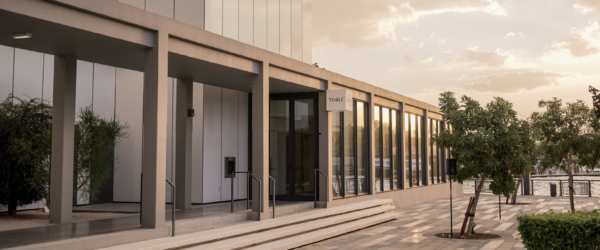
It’s quiet here, even when it’s busy. The food is delicious, the coffee is great, and the atmosphere (for some reason) reminds me of Oslo. I used to love sitting near the Opera there, enjoying the scenic view of the water. Since we’re doing an interview for the first Russian-language lifestyle publication about Dubai, I thought it was important to meet here.
Many people who visited Dubai 7–10 years ago still perceive it as a “plastic city.” But it seems like things have changed.
They definitely have. I can easily understand Europeans who choose to move here. Once you immerse yourself in the city’s culture—which takes about six months—you realize there are an incredible number of cozy spots that nobody seems to know about. Dozens of places can completely change your perspective on the city. Today, we’re in one of them. This is the kind of Dubai that attracts people to stay long-term.
Your background is fascinating: you led marketing for the “Afisha-Restaurants” service, served as the marketing director for the Saint Petersburg-based World Class network, and worked with online retailers like Names.ru and Aizel.ru. You’re an investor and a business angel, and you run over 20 Telegram channels. Forbes and RBC have both asked, “What should we call you?” and I imagine you’re tired of that question. So, I’ll ask this instead: How does your daughter describe you, apart from calling you “Dad”?
To her, Dad is just “at work.” She even thinks I sit in an office—I have no idea where she got that impression! In reality, Dad doesn’t go to an office. Dad doesn’t even have one (laughs).
Sasha Sysoev on Food, Dubai, and Building a Global Guide
It feels like you’re always on the move. Why can’t Sasha Sysoev stay in one place? Is it part of your character, a desire to do it all, or pure ambition?
I think 10–15 years ago, you could work in marketing and just stay comfortably in that field. Today, the world has entered a phase where nothing is guaranteed, and sticking to one profession feels a bit odd. Of course, there are foundational fields like medicine and architecture, but even there, professionals often branch out into adjacent areas. For instance, a great doctor might also mentor younger doctors or create B2C courses.
I used to like the Russian saying: “Don’t put all your eggs in one basket,” but 20 years ago, I didn’t fully grasp its meaning. Back then, I thought it applied only to financial literacy—like not keeping all your money in one currency. Now, I see it differently: it’s better to develop several interrelated directions simultaneously, ones that aren’t dependent on external factors.
Take COVID, for example. Many restaurants shut down, but there was a huge spike in media consumption. People read the news more and explored online museums.
I’m drawn to everything related to the entertainment industry: coffee shops, restaurants, clubs, and beaches. This also includes projects that genuinely help people make decisions about how they’ll spend their free time. For instance, GreatList was entirely my idea. I wanted to create a link I could send to people when they asked, “Where should I go in city X?” The project turned out well—it’s now a leader among affluent audiences in Russian megacities. We’ve launched it in Dubai, too.
Why does Dubai need GreatList when Michelin is already here? And what criteria does a restaurant need to meet to be included?
First of all, Michelin was in Moscow too, and that didn’t stop me from creating GreatList there. Secondly, I’ve always believed any rating system can be made more interesting and objective.
The problem with traditional guides is that they announce their top picks just once a year. But the culinary industry evolves so rapidly that this approach feels outdated. Last year’s recommendations don’t work for people who visit a city every month. GreatList is different because it updates the database in real time. If a restaurant gets a new chef, it’s removed from our list. It can only return after we reassess it.
We also have a “New” section, where we feature recently opened venues. After six months, we reevaluate them and decide whether they’ll stay on the list or not.
What’s the decision-making process for that?
I bring together people from different industries—finance, IT, fashion—mainly executives and top managers who travel frequently and experience diverse cuisines. What’s important is that they pay their own bills. These are people with refined taste and broad exposure. I trust every one of them.
Are there any chefs on your team?
No, because chefs don’t often visit other restaurants, and their opinions can be biased due to the “chef brotherhood” that exists in the industry. None of my reviewers are from the restaurant business.
How many people evaluate restaurants for GreatList in Dubai?
Right now, 15, but we’re aiming for 30. Finding knowledgeable and unbiased experts with a trained eye is challenging. I never review restaurants without consulting four or five people from my team.
As for criteria, they’re simple: food quality, design, atmosphere, and service. In Dubai, we’re launching the guide in stages, dividing the city into areas like Downtown, Business Bay, DIFC, Jumeirah, and Palm Jumeirah. We’re focusing on tourists, who primarily stay in these central locations.
Why did you choose Dubai—at least temporarily—as your base? What attracts you to this city?
I’m still based in Moscow, but working in Dubai is an opportunity to expand internationally. At first, I launched a Telegram channel just to “test the waters”—exploring new places and sharing my finds. Then I realized that Dubai attracts a massive number of tourists from Russia and the CIS, so it made sense to bring GreatList here.
Later, I decided to adapt the experience of hosting the Russian Restaurant Festival, which we held in 54 cities, for Dubai. We’re already working on this and plan to host Dubai Gastronomic Week this year.
I get why Dubai is good for business, but what about living here? What do you enjoy about it?
I’d call myself an active consumer, and this city matches Moscow’s high standards for quality. There are no issues with deliveries here. Even the banking system, which causes headaches in Europe, works perfectly here.
For me, Dubai is also a comfortable place to implement ideas and launch exciting projects. I live for my ideas, and this city welcomes creativity with open arms.
Over the past three years, Dubai has become one of the world’s capitals, in my opinion. Launching a project here immediately attracts international attention. If your project makes it into the top 10 in Dubai, you’ve caught the world’s eye.
Top 5 favorite spots in Dubai?
I’ve always loved hotels. In St. Petersburg, I used to go to hotel lobbies to work or hold meetings. They felt like hubs where millions of people’s paths crossed.
Here in Dubai, I like the Edition Hotel in Downtown. There’s a great, quiet café called Thia with a pool and a view of the Burj Khalifa.
I’m a city kid, so I love the layout of DIFC, with its art installations. When you treat the city as a living organism and keep exploring, you’ll find dozens of incredible places that tourists don’t know about but locals adore. Take Em Sherif, for example—it looks like a regular café but serves, in my opinion, the best Lebanese food in the city. Or there’s Margo, a villa that looks like nothing special from the outside but houses a flower shop run by owners who moved here from Marseille.
If I had to name specific spots, I’d say Toby’s Roasters, a coffee shop with a Singapore-inspired aesthetic—sleek marble combined with rough concrete. For Japanese food, there are excellent options like Hōseki, Sumosan, Itadaku, and Uchi.
I also admire the Rikas Group; their venues feel aligned with my style (Mimi Kakushi, 105, Eugene Eugene). There’s also Fundamental Hospitality from Evgeny Kuzin (Gaia, Alaya) and The Guild by EatX—a place unlike anything I’ve ever seen, with multiple concepts under one roof.
Where can people usually find you?
I’d say you’ll often find me in two areas: One Central and Design District. I like working there with my laptop, sitting on a bench.
If you had unlimited funds and the opportunity to open any business in Dubai, what would it be?
It would be a hotel—perhaps even a chain in Russia and Dubai—where I’d blend modern and classical art. The design would feature fine woodwork alongside smart home technology. Ideally, it would be located in Downtown, boutique-sized with around 40 rooms, offering impeccable service and a top-tier concierge.
I’d live on the ground floor and personally interact with guests, acting as that friend who knows everything about the city. It would be a speakeasy-style hotel, accessible only to a select few. Guests would need to fill out a short application, answering the question, “Who are you?” Only those who positively impact the world—architects, marketers, IT professionals, and so on—would make the cut. I wouldn’t accept slackers.
What would you name this hotel?
I haven’t thought about it yet. Maybe something short—like the building’s address. I’m not ambitious in this regard and don’t aim for it to be named after me, like “Alexander Sysoev’s Hotel.”
Speaking of names, it’s said you like projects to carry your name. Is that true?
Not really. It just happened once when we named a Telegram channel as a joke, planning to change it later. But somehow, it stuck.
You already have five Telegram channels about the UAE. What’s the most surprising news you’ve come across that made you think, “Wow, is this even possible?”
Three years ago, when I was just getting to know the city, I heard about Kerzner Group’s plans. They announced the names of chefs they’d signed contracts with for their restaurants in Atlantis The Royal and One&Only. When I imagined Michelin-starred chefs like Heston Blumenthal, Björn Frantzén, and David Muñoz working under the same company, I was blown away. In the culinary world, they’re like the gods of Olympus.
It amazed me that people could think on such a scale. It aligns with what Sheikh Mohammed once said in an interview: “We want to be the best.” When the journalist asked, “In the region?” he replied, “No, in the world!”
That’s the mindset of so many companies here—they genuinely think on a global level.


