STOCKHOLM: THE GLITTERING CAPITAL ON THE WATER
A French marshal who became King of Sweden; a warship that sank on its maiden voyage; an art gallery disguised as an underground railway; elegant waterfronts, hidden squares, leafy parks, home-grown fashion labels and restaurants worthy of the world’s best dining guides — welcome to Stockholm.
When to Go
Advent stars glowing in windows, millions of candles, evergreen wreaths and gingerbread houses — come November and December, it is difficult to imagine a city anywhere in the world more inviting than Stockholm.
Early in the year, however, the Christmas fairytale gives way to a rather more damp and unforgiving reality, which only begins to loosen its grip with the arrival of April. July and August are holiday season. That may sound harmless enough, until you realise that restaurateurs take their summer holidays too, with some of the city’s best establishments closing for several weeks.
Early autumn is gentle and beautifully coloured, but by mid-October grey skies begin to take command.
For the traveller, June may be the perfect month to arrive. Bars and outdoor terraces hum late into the evening, blue skies are reflected in even bluer water, gravel crunches underfoot in cool green parks, the air is fresh, dawns are soft, evenings seem endless and sunsets are suitably dramatic.
Gamla Stan and Kungsholmen
Gamla Stan, Stockholm’s Old Town, is where any acquaintance with the city should begin.
A considerable part of it is occupied by the working Royal Palace, where several English-language tours take place each day. The historical commentary may be most rewarding to those who can confidently tell Gustav II from Gustav III, but the royal apartments, ceremonial rooms and Treasury are impressive enough to captivate almost anyone.
At noon, the changing of the guard takes place in the palace courtyard. The scale of the ceremony varies with the season; in summer, it can turn into a full-blown musical spectacle.
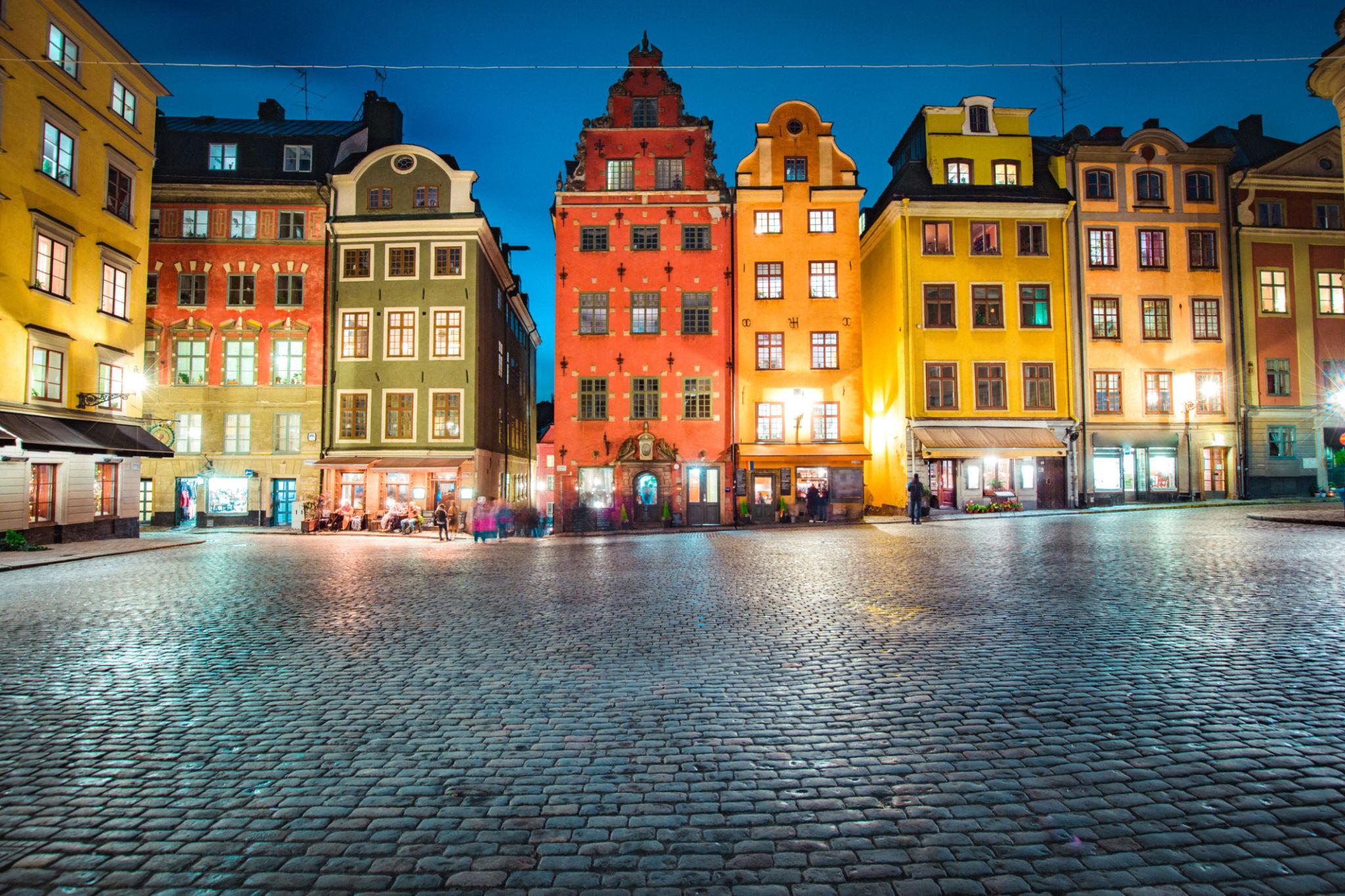
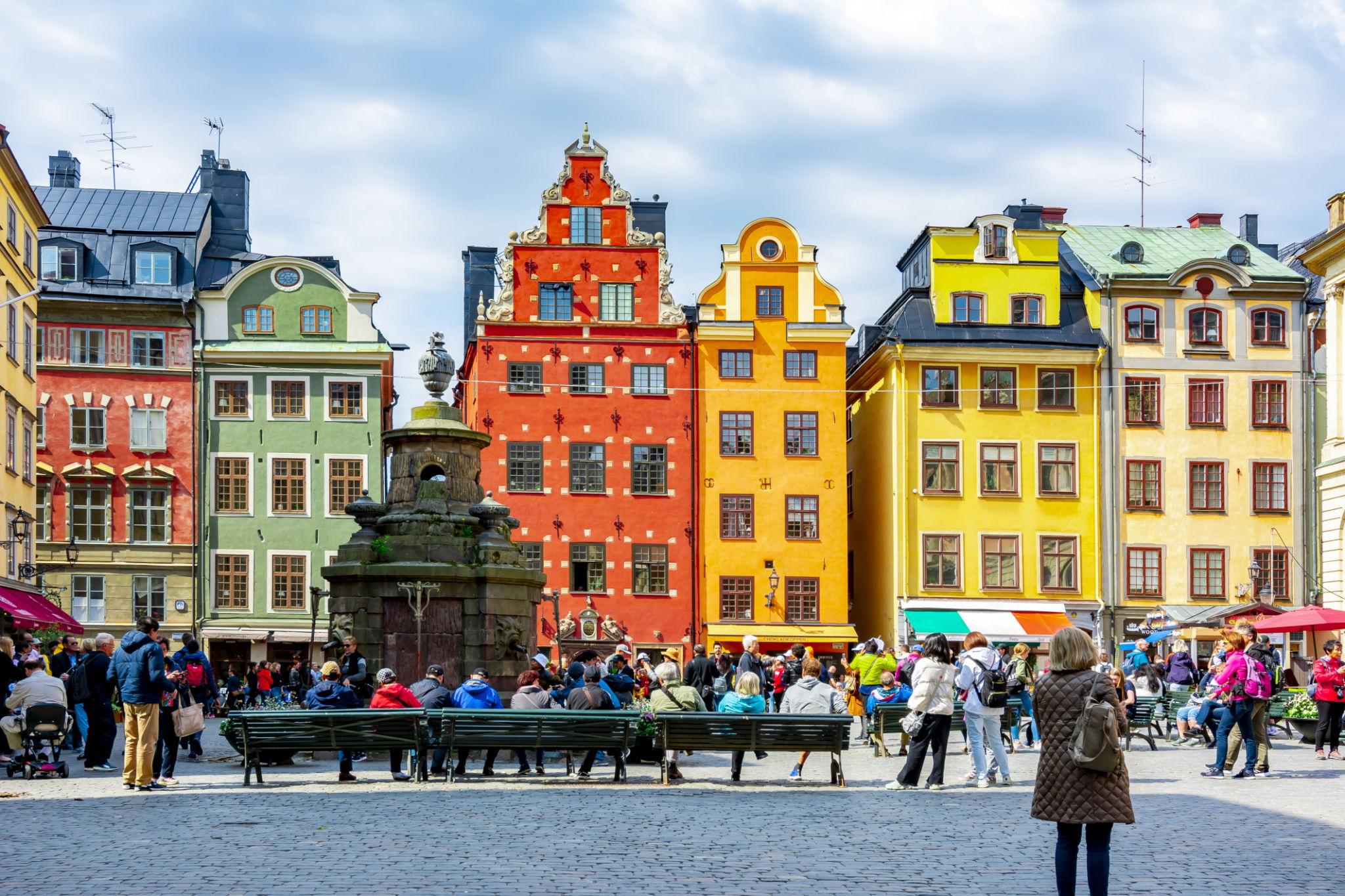
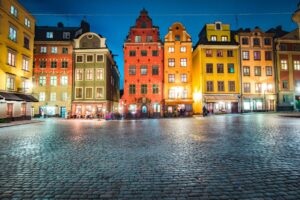
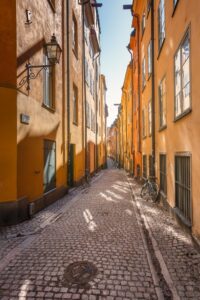
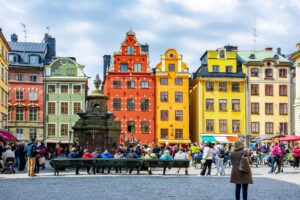
Behind Stockholm Cathedral, Storkyrkan, which stands beside the palace, lies the heart of the Old Town. Its obvious attractions include Stortorget, the postcard-perfect square lined with colourful façades and centred around an old well; the Finnish Church and its tiny sculpture of a boy gazing at the moon; Mårten Trotzigs Gränd, the narrowest alley in Stockholm; and the picturesque streets of Stora Nygatan and Lilla Nygatan.
Yet Gamla Stan is much more than tourist crowds, predictable pubs and souvenir shops filled with horned helmets and plush moose.
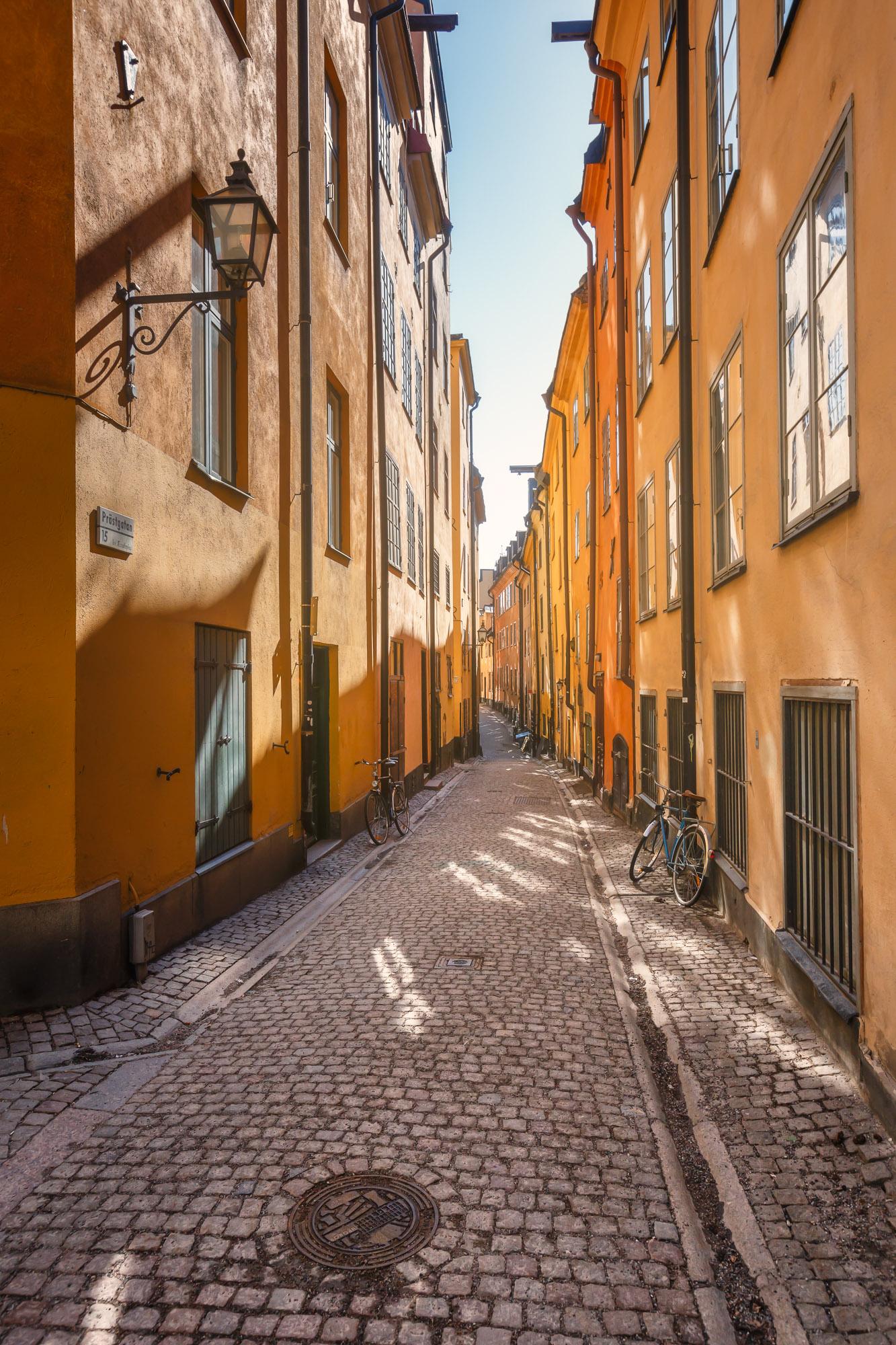
Escape the bustle and wander through the quiet lanes near the Skeppsbron waterfront or along Prästgatan, past buildings painted in deep reds and warm ochres. Seek out Stockholm’s hidden squares: Brantingtorget, concealed behind a circular arcade, and Brända Tomten, shaded by a solitary but magnificent chestnut tree.
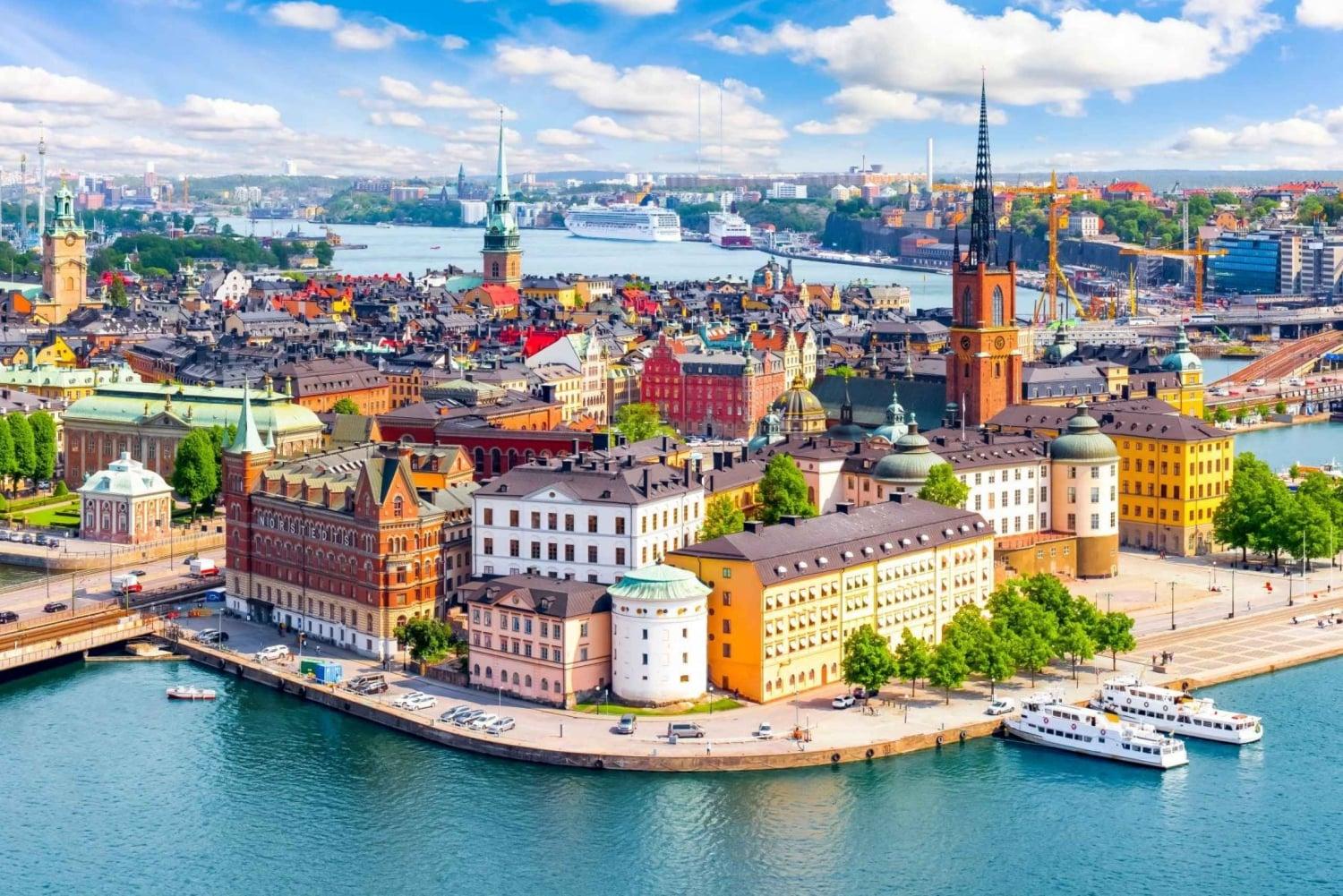
Eventually, make your way to Riddarholmen, a tiny island where Riddarholmen Church — the burial place of Swedish monarchs, crowned by its delicate cast-iron spire — is surrounded by palaces in the austere Scandinavian interpretation of the word.
Watching the low northern sun play with shadow and light across the coral-coloured walls of the Stenbock Palace can feel almost meditative. From the Riddarholmen waterfront, classic Stockholm views unfold across Mariaberget in Södermalm, Lake Mälaren and City Hall.
City Hall itself stands on Kungsholmen, only a short walk from the Old Town. Every December, its dark-red brick interiors host the grand banquet honouring the year’s Nobel Prize laureates.
The first Russian Nobel laureate was physiologist Ivan Pavlov in 1904. That ceremony was remembered, among other things, for the courtesy of King Oscar II, who learned several phrases in Russian to express his respect for the scientist.
At other times of the year, anyone can join a guided tour through the halls where some of the world’s greatest minds have dined.
City Hall is crowned by a 106-metre tower with an observation deck open from May to September. The reward is a spectacular view over Stockholm — although it has to be earned. The lift covers only the first part of the ascent; the rest is on foot.
From the nearby pier, small boats depart for Drottningholm, the summer residence of the Swedish royal family. The journey across Lake Mälaren takes around an hour, but Drottningholm itself easily deserves a full day: there is the palace, a formal Baroque garden, an enormous park and an almost toy-like Chinese Pavilion hidden among the greenery.
Norrmalm
Anyone arriving in Stockholm on the high-speed train or airport bus from Arlanda will find themselves at Central Station.
It is an enormous transport hub — a maze of railway platforms, bus gates, restaurants, shops, corridors, halls, passageways and escalators where getting lost can be easier than in the Old Town itself.
The station seems to extend its influence into the surrounding neighbourhood, lending the nearby blocks a somewhat scruffy appearance that is hardly Stockholm at its most photogenic.
Architecturally, Norrmalm was a very different place until the middle of the twentieth century. Then the authorities decided to demolish much of the old neighbourhood and replace it with a modern commercial centre.
Its rather controversial symbols eventually became the five sombre concrete office towers along Sveavägen and the sculptural glass obelisk rising above Sergels Torg.
Any melancholy induced by all that concrete can be drowned at Röda Huset, Stockholm’s regular presence on international lists of the world’s best bars, and then comforted with something sweet at the classic Vete-Katten café. One encounter with its Swedish cinnamon buns — or its shrimp, egg, mayonnaise and herb salad — may be enough to create a lifelong attachment.
Norrmalm is bisected by the pedestrianised Drottninggatan. Among its mass-market shops and unremarkable pubs hides the delightful courtyard of Stockholm’s historic Centralbadet baths.
Shopping on Drottninggatan itself is debatable, but far better alternatives are close by. NK is Stockholm’s grand department store, with more than a century of history and a range that stretches from Bottega Veneta handbags to loose-leaf tea.
Nearby is Bibliotekstan, the city’s fashion district, where leading Swedish labels sit side by side — Acne Studios, COS, J.Lindeberg, Filippa K, Asket and A Day’s March among them.
From Norrmalmstorg — the square where a 1970s bank hostage drama gave rise to the term “Stockholm syndrome” — Kungsträdgården stretches almost all the way towards the Royal Palace.
The boulevard also lends its name to Hotel Kungsträdgården, strategically placed for many of the city’s key sights and decorated in the restrained elegance of traditional Swedish Gustavian style.
In May, Kungsträdgården becomes one of the busiest places in Stockholm. Cherry trees form a continuous canopy of pink blossom, attracting hundreds of visitors.
At the centre stands a monument to King Charles XIII, around which Stockholm’s main outdoor skating rink appears in winter. Charles XIII, who had no children of his own, adopted the 47-year-old Napoleonic marshal Jean-Baptiste Bernadotte, who later became King of Sweden and founded the dynasty that still reigns today.
Nearby, a bronze fountain murmurs beneath dramatically beautiful willow trees. Closer to the bridge leading towards Gamla Stan stands another royal monument, this time to Charles XII, the king who fought Peter the Great. A sword rests in his right hand; his left points symbolically towards St Petersburg.
On the small peninsula of Blasieholmen stand the classic Grand Hôtel — home to the relatively new but already acclaimed Seafood Gastro and the more relaxed Matbaren — and the Nationalmuseum, both recently transformed by major renovations. The palace of the Swedish Order of Freemasons is here too.
A 160-metre bridge leads from here to Skeppsholmen, connecting what feel like two entirely different worlds: the capital and a nature reserve.
There are no ordinary residential buildings on the island. Instead, there are museums of modern and East Asian art; the minimalist Hotel Skeppsholmen, housed in former military barracks and perpetually scented by Byredo candles; a naval college; an art school; and a marina where Stockholmers moor their yachts and boats after returning from the archipelago.
Skeppsholmen is quiet. Almost no one is around, apart from the occasional bicycle whispering along a path.
The Baltic laps at the shoreline. Across the water, the houses of Gamla Stan huddle together; the lights of Gröna Lund amusement park sparkle nearby; and every so often a graceful ten-storey giant — a Viking Line ferry — glides across the panorama of Södermalm’s hills.
When you need to escape Stockholm without actually leaving it, Skeppsholmen is the obvious answer.
Part of Norrmalm’s appeal lies underground.
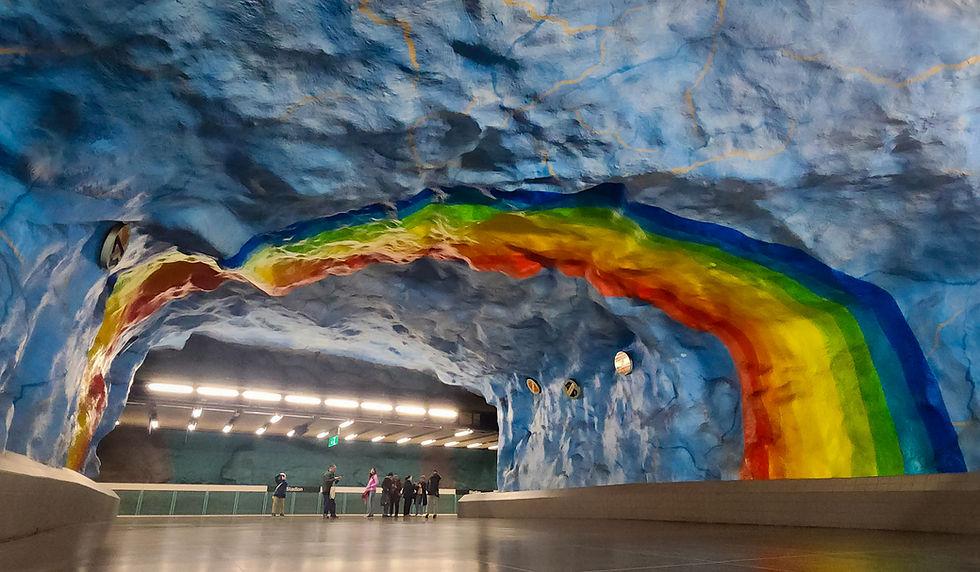
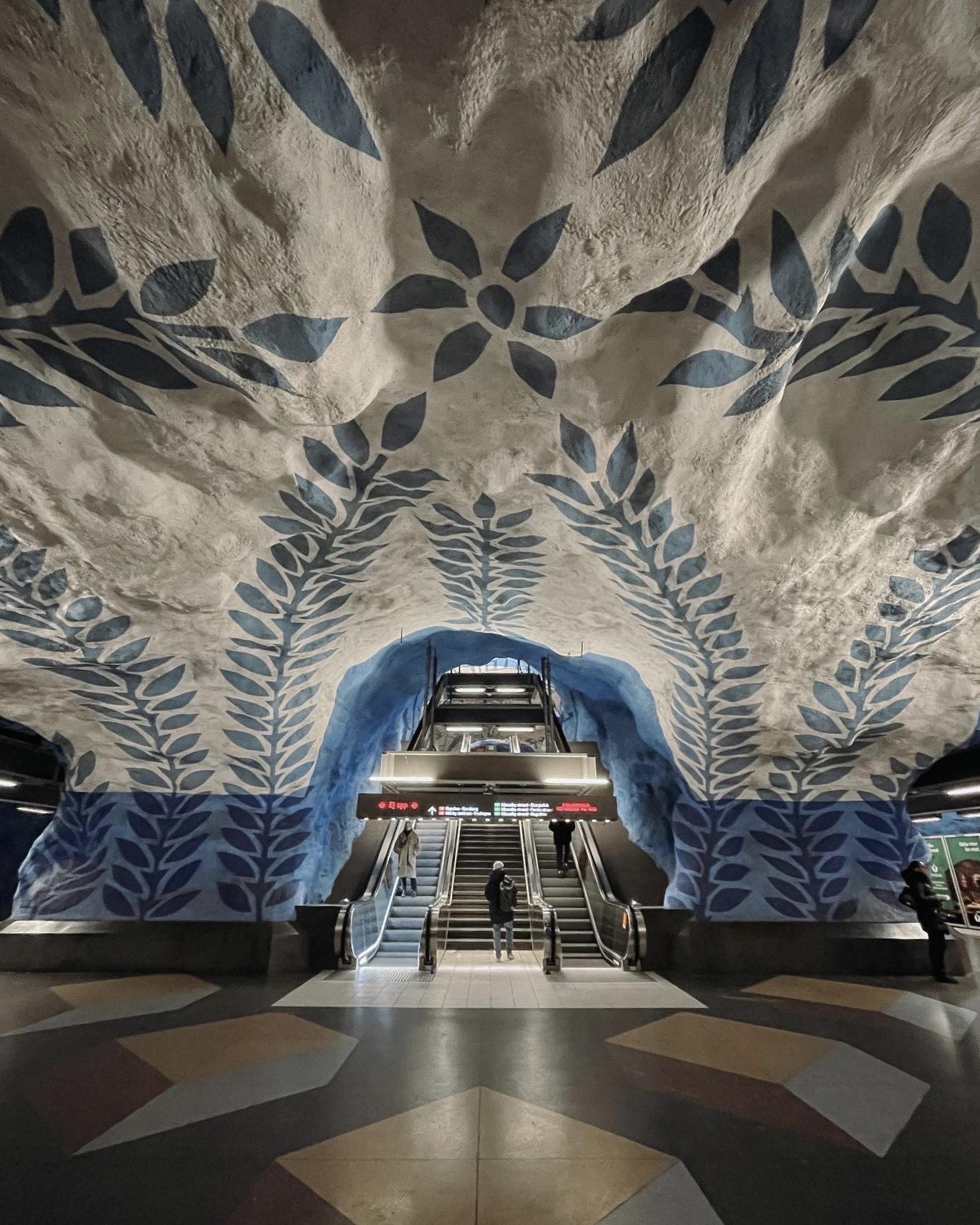
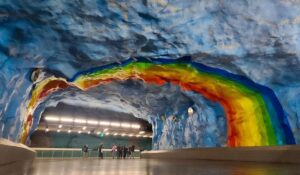
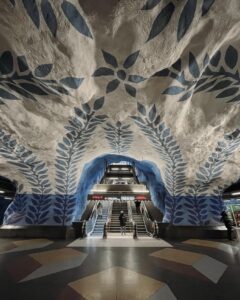
Stockholm’s metro is often described as the world’s longest art gallery. Some of its most striking stations are concentrated along the Blue Line: Kungsträdgården, whose design draws inspiration from the Makalös Palace destroyed by fire; T-Centralen, with its extraordinary blue-and-white botanical motifs; and Solna Centrum, where escalators rise through rock painted an intense red to evoke the setting sun.
It is one of those rare places where simply stepping onto an escalator allows you, quite literally, to disappear into the sunset.
Östermalm
If the air suddenly seems infused with understated prosperity, respectability and the unmistakable scent of old money, you have arrived in Östermalm.
At the end of the nineteenth century, the city transformed what had once been an area of cattle yards into Stockholm’s most prestigious residential district.
Property prices here are formidable. The closer you get to the water, the more astronomical they become.
Birger Jarlsgatan and the legendary nightlife hub of Stureplan are where the neighbourhood’s energy is concentrated: famous bars such as Riche, clubs including Spy Bar and Sturecompagniet, restaurants such as Sturehof, luxury boutiques, prestigious offices and photographers hoping to catch celebrities and Stockholm’s gilded youth enjoying themselves.
A little farther from the centre lies the peaceful Humlegården park. Opposite the National Library stands a monument to the great botanist Carl Linnaeus, the “King of Flowers”.
North of the park rises Engelbrekt Church, surrounded by luxurious brick apartment buildings dating from the early twentieth century. Nearby is Ett Hem, one of Stockholm’s most exclusive hotels and an ideal address for the travelling sybarite.
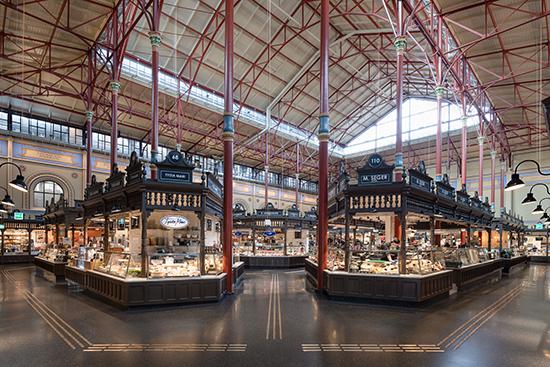
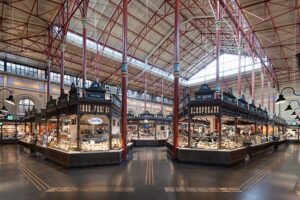
Deep in Östermalm, Östermalms Saluhall has long since become an attraction in its own right.
Inside are stalls selling exceptional local produce — Västerbotten cheese among them — alongside excellent restaurants, including Lisa Elmqvist, an institution approaching its centenary.
Behind the imposing Hedvig Eleonora Church is one of Stockholm’s most compelling museums: the Swedish Army Museum.
Its creators do not dwell on glorious victories or indulge in patriotic mythology. Instead, the history of warfare is told through the experiences of ordinary soldiers and their families rather than fearless generals and propaganda-made heroes.
The conclusion is difficult to avoid: war is, above all, fear, chaos, destruction, ruin, suffering and death. Heroism comes later — if that “later” matters at all.
If there is a museum capable of explaining war in a fascinating way while simultaneously making visitors, especially children, recoil from it, Stockholm’s Armémuseum may well be that place.
The residential streets around the museum embody Östermalm perfectly: quietly self-assured in their restrained northern luxury.
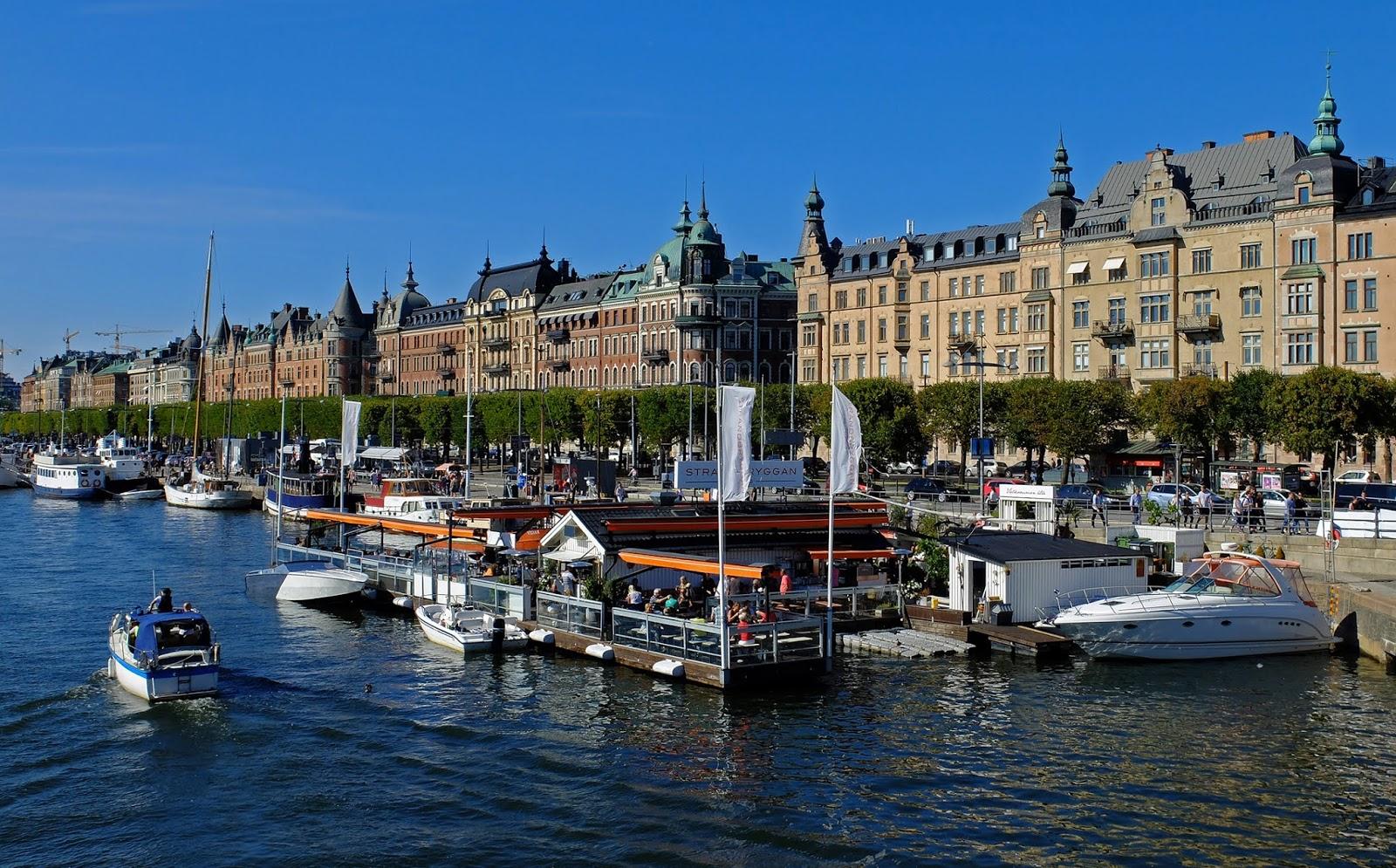
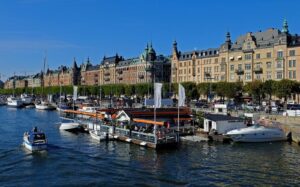
From here it is a short walk to Stockholm’s grandest waterfront, Strandvägen, where residents pay an additional premium for the privilege of a water view.
On one side stand the immaculate façades of Hotel Diplomat and Hotel Esplanade, as well as the Royal Dramatic Theatre, whose steps are a favourite lunchtime perch for bankers and lawyers. On the other, boats are moored by some of the city’s most formidable connoisseurs of the good life.
Djurgården
Across the water lies Djurgården, the great green island that has become a destination for visitors eager to witness the extraordinary Vasa.
In the seventeenth century, one of Sweden’s greatest monarchs, the “Snow King” Gustav II Adolf, whose armies once intimidated half of Europe, ordered a magnificent new flagship for his navy.
It sank on its maiden voyage, barely making it out of Stockholm harbour, largely because of errors in its design.
More than three centuries later, the Swedes located the wreck, raised it from the seabed and — with admirable confidence — built an entire museum around it.
The result is spectacular. Visitors can examine the ship’s vast hull and decks from different heights and angles while discovering what life was like in Stockholm four centuries ago.
Another Djurgården institution beloved by Stockholmers is Skansen.
The Swedish invention — an open-air ethnographic museum made up of traditional buildings representing different parts of the country — proved so influential that the word “skansen” became a generic term for similar museums around the world.
Every year, when Stockholmers decide where to dance around the maypole at Midsummer, watch the Christmas festivities or gather around a giant bonfire on Walpurgis Night, Skansen remains one of the most natural choices.
Djurgården, of course, is far more than Vasa and Skansen. There is the summertime Gröna Lund amusement park, several other museums and genuine stretches of woodland dotted with secluded villas and small palaces.

Södermalm
Södermalm is Stockholm at its most fashionable and bohemian.
Its reputation was forged by a younger creative generation who, at the beginning of this century, began colonising the streets south of Folkungagatan with small workshops and shops selling clothes, jewellery, vinyl records and vintage curiosities.
The district became known as SoFo — South of Folkungagatan — and it was SoFo that helped turn Södermalm into an international byword for Stockholm cool.
Among the cafés and bars — locals are fond of dropping into Folii for a glass of wine — second-hand stores and shoemakers, one address stands out: Pärlans Konfektyr, the sweet shop attached to the confectionery of the same name.
Its vanilla and sea-salt caramels may just be the best in the world.
Södermalm is hilly, and its waterfront heights provide some of Stockholm’s finest viewpoints.
One is Katarinavägen, with views towards Djurgården and the Baltic Sea. As Katarinavägen flows into Fjällgatan, the twenty-first century seems to dissolve into the seventeenth.
Long ago, Södermalm was a poor working-class district dominated by low red wooden houses. Stone buildings gradually claimed more territory, industrialists and bohemians replaced the proletariat, but Fjällgatan and its surrounding streets preserve a small enclave of that earlier Stockholm.
An ingenious network of picturesque stairways, climbs and descents eventually leads to the narrow Monteliusvägen promenade, and from there to Ivar Los Park, a favourite picnic spot among Stockholmers.
Below lies Lake Mälaren, reflecting the silhouettes of Riddarholmen’s buildings in its surface, separated from the sea by locks to the right.
Nearby, on Bellmansgatan, stands the home associated with Mikael Blomkvist, the fictional journalist from the cult Millennium trilogy.
Stieg Larsson’s detective novels helped Stockholm capture the imagination of millions of readers, and tours now follow the locations featured in The Girl with the Dragon Tattoo and the books that followed. Lonely Planet once ranked them among the world’s most compelling literary tours.
Södermalm is also home to one of Stockholm’s most successful modern museums, Fotografiska.
The photography museum, housed in a former customs building, became such an international success that the concept expanded beyond Sweden.
After an exhibition, head for Champagnebaren. This celebrated open-air terrace makes a persuasive claim to being one of the finest places anywhere to say goodbye to the setting sun — preferably with a glass of something sparkling in hand.
The Capital of Scandinavia
Stockholm seems to possess an almost unfair combination of attractions for the sophisticated traveller: a rich history, harmonious architecture, museum treasures, an exceptionally liveable urban environment, breathtaking views, vast expanses of water and innumerable green parks.
Then there is the Stockholm archipelago, worthy of an entire guide of its own; restaurants decorated with Michelin stars; and distinctive local brands that have long since outgrown Sweden’s borders.
Add a strong economy and enviable geography, and Stockholm begins to feel like more than simply Sweden’s principal city.
It makes a convincing case for being the capital of Scandinavia itself.
Text: Vadim Dankov